Allen, Texas: Connected Living in a North Dallas Community
Allen, Texas, offers a polished suburban lifestyle with strong schools, extensive recreation, major shopping destinations, and convenient access to the Dallas-Fort Worth region. Located in Collin County, Allen has grown from a small railroad town into a thriving city known for well-planned neighborhoods and community amenities. Residents can spend a morning on a local trail, shop or dine at one of several prominent retail districts, attend a sporting event, and return home to a quiet residential street. The city appeals to households at many stages of life, including professionals seeking manageable commutes, families who value educational options, and buyers who want suburban space without feeling removed from urban opportunities. Parks, recreation centers, public art, youth programs, and seasonal events help residents stay involved throughout the year. Allen combines the services and conveniences of a larger city with the familiarity of an established suburban community, giving homebuyers a comfortable place to put down roots in North Texas.
From Railroad Stop to Growing North Texas City
Allen’s recorded history began during the settlement of Collin County in the 1840s. Early residents established farms and small homesteads across the Blackland Prairie, where fertile soil supported cotton, corn, wheat, and livestock. The arrival of the Houston and Texas Central Railway in the early 1870s changed the area’s future. A town developed around the tracks, providing local farmers with a practical way to ship crops and purchase goods.
The community received its name from Ebenezer Allen, a Texas political figure and railroad promoter. Allen was officially incorporated in 1953, although it remained relatively small for several more decades. Historic events from the city’s early years include the first successful train robbery in Texas, carried out by Sam Bass and his gang in Allen in 1878. The arrival of the Texas Electric Railway in 1908 created another connection between Allen, Dallas, and communities to the north. The city’s surviving 1913 railroad depot recalls that important period in local transportation history. A major fire in 1915 destroyed much of the early downtown district, but residents rebuilt and continued developing the community.
Allen’s population expanded rapidly during the late 20th century as development moved north from Dallas and Plano. New residential subdivisions, schools, highways, and commercial centers transformed former farmland into a modern suburb. Careful planning helped the city add public facilities and recreational spaces as its population increased.
Today, Allen maintains connections to its past through the Allen Heritage Guild, historic properties, downtown landmarks, and educational programs. These local resources preserve the stories of farming families, railroad workers, merchants, and civic leaders while newer neighborhoods and business districts support the city’s continued growth.
Homes for Sale
Recreation, Shopping, and Everyday Life in Allen
Daily life in Allen offers residents plenty of ways to stay active, spend time outdoors, shop locally, and enjoy community entertainment. The city maintains an extensive park system with neighborhood playgrounds, athletic fields, greenbelts, ponds, and paved trails. Celebration Park is one of Allen’s best-known outdoor destinations, featuring sports fields, picnic areas, a large playground, and open lawn space. Bethany Lakes Park offers fishing ponds, walking paths, and peaceful areas for an afternoon outdoors.
Allen’s recreation facilities serve residents of many ages and interests. The Don Rodenbaugh Aquatics Center includes indoor swimming areas, fitness amenities, and aquatic programs. The Edge at Allen Station Park provides skateboarding and BMX facilities, while the Stephen G. Terrell Recreation Center offers fitness areas, courts, indoor recreation, and community programming. Golfers can visit The Courses at Watters Creek, a public golf complex near the city’s southern edge. Allen has dozens of parks and more than 1,000 acres of dedicated parkland, giving residents outdoor options throughout the community.
Shopping and dining are central parts of Allen’s lifestyle. Allen Premium Outlets draws visitors with national brands and outlet shopping. Watters Creek Village combines stores, restaurants, offices, residential spaces, landscaped walkways, and gathering areas. The Village at Allen and nearby Stacy Road developments add sporting goods stores, home retailers, restaurants, and entertainment venues.
The Credit Union of Texas Event Center hosts professional sports, concerts, family shows, graduations, and community gatherings. Residents can also attend performances, exhibits, and programs presented by local arts organizations and city departments. Seasonal celebrations, outdoor concerts, holiday activities, recreation leagues, and library programs create regular opportunities to meet neighbors and participate in civic life.
Allen’s atmosphere feels active and organized. Residential streets often sit close to schools, parks, and shopping, which helps simplify everyday routines. Homeowners can choose a quieter evening at a neighborhood park or a full schedule of dining, recreation, and entertainment without traveling far from home.
Neighborhoods with Distinct Settings and Home Styles
Allen includes established subdivisions, golf course communities, newer developments, and residential areas near mixed-use destinations. Home styles range from traditional brick properties with mature landscaping to larger custom residences and newer houses with open floor plans. The following communities represent several of Allen’s most recognizable residential options.
Twin Creeks: Twin Creeks is a large master-planned community in western Allen. Its neighborhoods surround landscaped green spaces, trails, parks, pools, and The Golf Club at Twin Creeks. Properties vary in size and style, including traditional single-family homes, larger custom residences, and homes positioned near greenbelts or golf course views. Mature trees and established landscaping give many sections a settled appearance. Community amenities encourage outdoor activity, while nearby Exchange Parkway and U.S. Highway 75 provide access to schools, employment centers, shopping, and dining. Twin Creeks often appeals to buyers who want recreational amenities and a strong neighborhood identity within a larger suburban setting.
Watters Crossing: Watters Crossing is an established community known for tree-lined streets, parks, neighborhood pools, trails, and traditional home designs. Many properties feature brick exteriors, practical floor plans, and yards suited to recreation or outdoor entertaining. Its location near Watters Creek Village gives residents convenient access to restaurants, specialty shops, services, and community events. Schools and major roads are also nearby, making the area practical for households with busy schedules. Watters Crossing provides a residential setting with mature landscaping while remaining close to some of Allen’s most popular commercial areas. Buyers often consider it when seeking an established neighborhood with shared amenities and a central location.
StarCreek: StarCreek is a master-planned neighborhood in southwest Allen near State Highway 121. Homes often include spacious interiors, updated finishes, flexible living areas, and architectural details designed for modern households. The community includes pools, trails, green spaces, sports courts, and gathering areas that support an active neighborhood environment. Its location provides convenient routes to business centers in Plano, Frisco, Richardson, and other parts of North Dallas. Shopping and dining at Watters Creek, The Village at Allen, and nearby developments add everyday convenience. StarCreek may suit buyers who prefer newer construction, organized amenities, and quick access to regional employment corridors.
Montgomery Farm: Montgomery Farm combines residential living with access to trails, natural areas, shops, restaurants, and offices. The broader development emphasizes connected streets, preserved open space, and pedestrian access. Housing options include apartments, townhomes, traditional single-family homes, and custom properties in Montgomery Farm Estates. Buyers can find contemporary architecture, upscale interiors, and homes close to landscaped paths and community destinations. The neighborhood’s proximity to U.S. Highway 75 supports travel throughout the Dallas area. Montgomery Farm appeals to residents who enjoy being near retail and dining while maintaining access to parks, trails, and residential streets.
Suncreek: Suncreek occupies a convenient location along Allen’s southern boundary near Plano. The neighborhood includes established homes, mature landscaping, greenbelt areas, and access to trails. Many houses feature traditional North Texas architecture, spacious rooms, and yards that provide room for outdoor living. Residents can reach U.S. Highway 75, State Highway 121, Watters Creek, and employment centers in nearby cities without crossing the entire community. Several sections sit near wooded areas and creek corridors, adding natural scenery to the suburban setting. Suncreek offers an appealing balance for buyers seeking an established neighborhood, convenient regional access, and proximity to Allen and Plano amenities.
Together, Allen’s neighborhoods provide choices for several lifestyles and budgets. Buyers can prioritize golf amenities, mature trees, newer construction, trail access, or proximity to shopping while remaining connected to the city’s schools, parks, and public services.
Schools and Lifelong Learning Opportunities
Most Allen students attend Allen Independent School District, which serves the city and portions of several neighboring communities. The district operates elementary schools across Allen, allowing many families to live within a short drive of their assigned campus. Middle school and high school programs build on core academics through electives, fine arts, athletics, technology courses, and extracurricular activities.
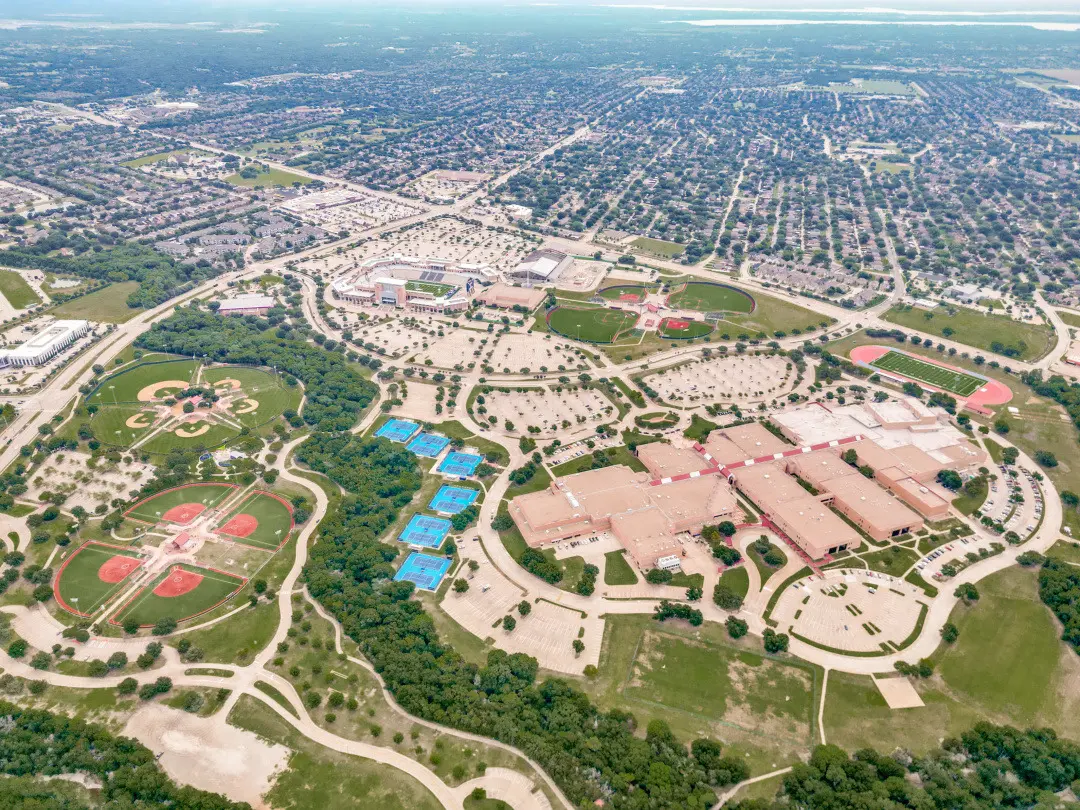
Allen High School is one of the district’s most recognized facilities. Students can choose from Advanced Placement classes, dual-credit opportunities, career and technical education, athletics, visual arts, performing arts, clubs, and leadership programs. Dual-credit partnerships with Collin College allow eligible students to complete college-level coursework while still enrolled in high school.
The district’s career-focused programs introduce students to fields such as engineering, health science, business, information technology, culinary arts, law, public safety, and skilled trades. Fine arts programs include band, orchestra, choir, theater, dance, and visual art. Allen’s athletic culture is also highly visible, with school teams and community support contributing to local identity.
Private and faith-based schools in and around Allen provide additional educational choices. Options include Allen Academy, Montessori schools, early childhood centers, and religious schools in Allen, Plano, McKinney, and Frisco. Because admissions, grade levels, and programs may change, families should contact each school directly when comparing current options.
Collin College operates the Allen Technical Campus, where students can pursue workforce training and technical education in fields connected to regional employment needs. Other Collin College campuses are located throughout the county. Nearby universities include The University of Texas at Dallas in Richardson, the University of North Texas at Frisco, Texas Woman’s University in Denton, and the University of North Texas in Denton. Southern Methodist University and several Dallas-area colleges are also within regional commuting distance.
Allen Public Library supports education beyond the classroom through books, research resources, technology access, children’s programs, classes, and community events. These public, private, technical, and university options give residents access to learning at every stage of life.
Four Seasons in a Warm North Texas Climate
Allen receives approximately 230 sunny days each year, about 41 inches of annual rainfall, and around 1 inch of snowfall. Summers are long and hot, winters are generally brief, and spring and fall bring some of the most comfortable outdoor conditions. July is typically the hottest month, with average highs near 94, while January lows often fall into the mid-30s.
Summer temperatures commonly reach the 90s, and periods above 100 can occur. Air conditioning, shaded patios, community pools, indoor recreation centers, and evening activities become important parts of seasonal life. Morning walks and later outdoor gatherings are often more comfortable than midday recreation.
Autumn brings lower humidity and daytime temperatures that gradually move from the 80s into the 60s and 70s. Residents use this season for festivals, youth sports, patio dining, trail walks, and neighborhood events. Trees across parks and residential streets provide touches of fall color, although the change is usually less dramatic than in northern climates.
Winter days often reach the 50s or 60s, with colder nights and occasional freezes. Snow and ice are uncommon, but brief winter weather events can affect roads and schools. Spring temperatures rise from the 60s into the 70s and 80s. Rainfall supports green lawns, flowering trees, and active parks. Spring can also bring thunderstorms, hail, strong winds, and tornado watches, so residents benefit from having reliable weather alerts and a household safety plan.
Road Connections Across Allen and North Texas
Allen’s location supports convenient travel to major employment, shopping, and entertainment centers across the northern Dallas suburbs. U.S. Highway 75 runs north and south through the city, connecting Allen with McKinney, Plano, Richardson, and Dallas. State Highway 121, also known as the Sam Rayburn Tollway, runs near Allen’s western and northern edges and provides access toward Frisco, Lewisville, Grapevine, and Dallas Fort Worth International Airport.
Major local roads include McDermott Drive, Bethany Drive, Exchange Parkway, Stacy Road, Alma Drive, Greenville Avenue, Allen Heights Drive, and Ridgeview Drive. These routes connect residential neighborhoods with schools, parks, shopping centers, and highway entrances.
Allen does not currently have full-service local rail or bus transportation through Dallas Area Rapid Transit. Most residents rely on private vehicles, rideshare services, carpools, or specialized transportation programs. DART rail stations in Plano provide an option for some commuters who prefer to drive to a station and continue toward Richardson or Dallas by train.
The city’s trail system supports walking, jogging, and recreational cycling. Trails connect several parks, neighborhoods, schools, and public facilities, although most daily errands still require a vehicle. Sidewalks in residential and commercial areas make shorter local trips more manageable.
Dallas Fort Worth International Airport and Dallas Love Field are each roughly 30 to 40 miles from Allen, depending on the route and traffic conditions. Addison Airport and McKinney National Airport serve private and corporate aviation closer to the city. Allen’s highway connections and regional airport access make business travel, commuting, and weekend trips practical while allowing residents to return to a comfortable suburban setting.
Find Your Place in Allen
Allen offers a strong combination of residential comfort, educational opportunity, recreation, shopping, and regional access. Its neighborhoods provide choices that range from established communities with mature landscaping to newer developments with trails, pools, and modern floor plans. Residents can enjoy extensive parks, community programs, major retail destinations, sporting events, and convenient routes to employment centers throughout North Texas.
The city’s history gives Allen a distinct identity, while continued investment in schools, roads, recreation, and public facilities supports its future. Whether you are seeking a larger home, a convenient commuter location, nearby amenities, or a neighborhood where you can become involved in community life, Allen deserves a close look.
When you are ready to explore homes for sale in Allen, compare neighborhoods, or learn more about the local real estate market, contact me. I can help you identify properties that fit your priorities and guide you through each step of buying a home in this well-connected Collin County community.